
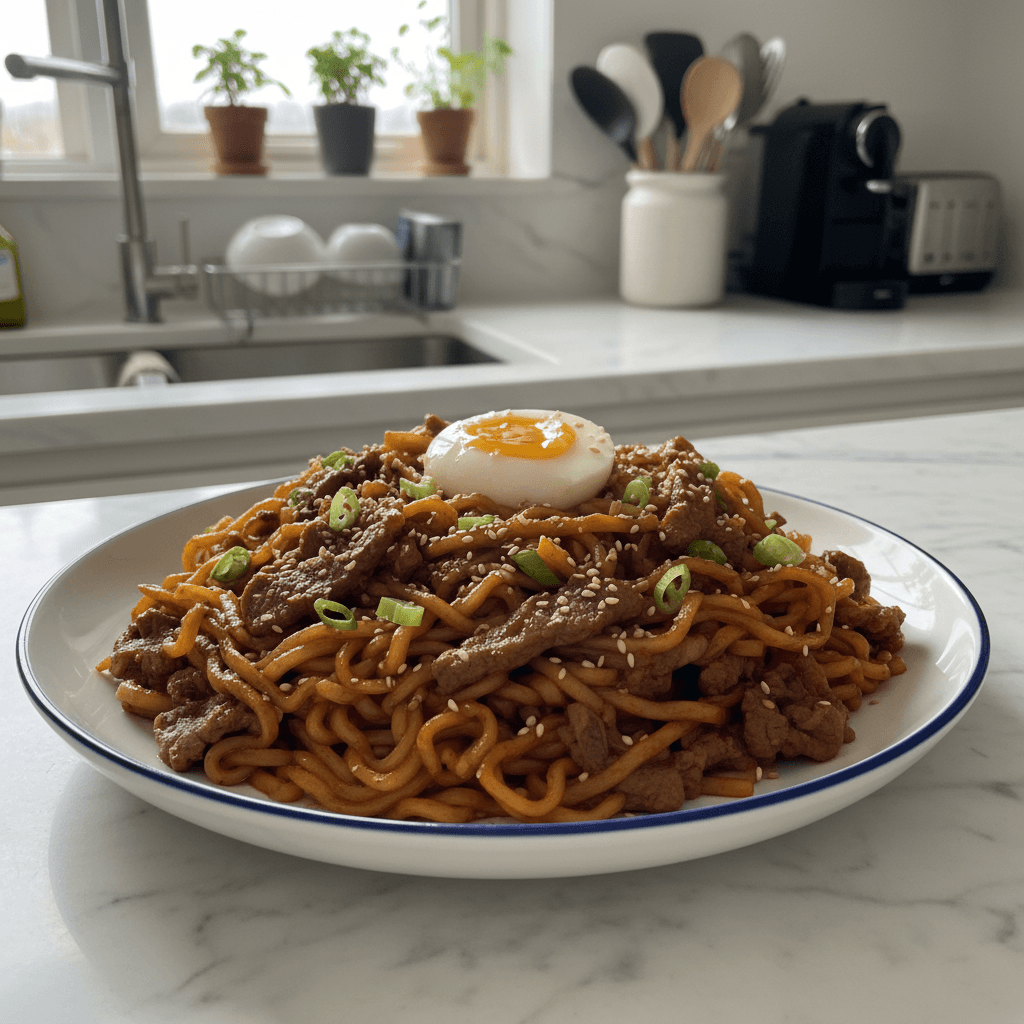
Honestly, some of my favorite recipes come from those moments when the fridge is looking a bit sad, and I’m just trying to make dinner happen. That’s exactly how these Spicy Korean Gochujang Beef Noodles came into my life! I remember one chilly evening, I had some leftover beef, a half-empty tub of gochujang, and a serious craving for something with a kick. What started as a ‘let’s just throw it all in a pan’ situation quickly became a household legend. The aroma of garlic and ginger hitting the pan, then that vibrant gochujang sauce simmering… oh my goodness, it just fills the kitchen with such a comforting, exciting vibe. This dish isn’t just food, it’s a hug in a bowl, a little bit of chaos, and a lot of deliciousness!
I once tried to get fancy with the noodles, thinking fresh egg noodles would be superior. Oops! They totally fell apart under the weight of the sauce and beef. My husband, bless his heart, just laughed and said, “Well, it still tastes good, just… soupy!” So, yeah, I learned my lesson. Stick to the sturdy stuff for these Spicy Korean Gochujang Beef Noodles, or you’ll have a delightful, albeit messy, noodle soup instead of a glorious stir-fry!

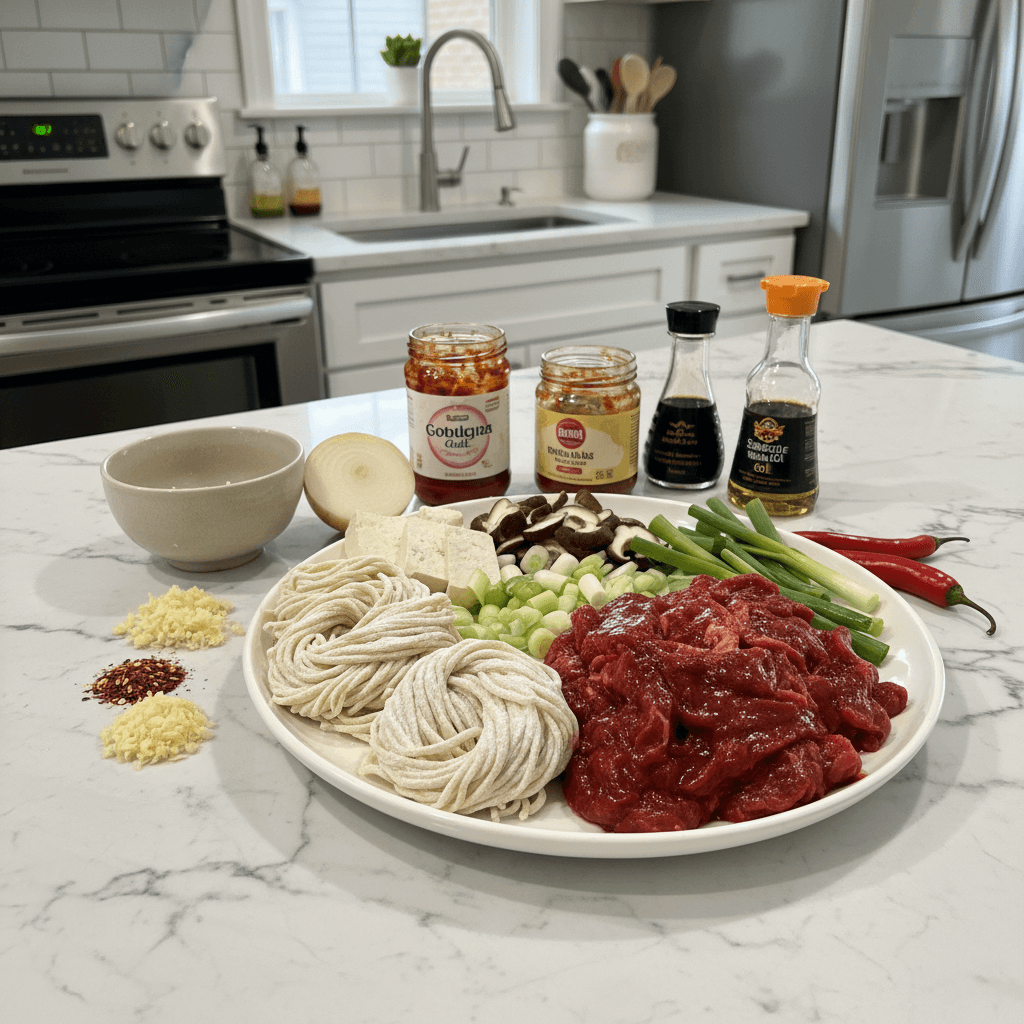
Ingredients for Spicy Korean Gochujang Beef Noodles
- Flank Steak: This cut is fantastic because it cooks fast and stays tender if you slice it against the grain. Honestly, don’t use a super lean cut, a little fat here adds so much flavor to the Spicy Korean Gochujang Beef Noodles.
- Udon Noodles: Oh, the chewiness! Udon is my absolute favorite for this dish because it stands up to the sauce. I tried a thinner noodle once, and it just got lost. If you can’t find udon, thick ramen noodles work, too, but the texture won’t be quite the same.
- Gochujang (Korean Chili Paste): This is the star of the show! It’s got that fermented, spicy, slightly sweet thing going on. Don’t skimp on this, but if you’re sensitive to heat, start with a little less and add more. I always have a big tub in my fridge, it’s a game changer.
- Soy Sauce: The salty backbone. I usually use a low-sodium one because the gochujang adds a good amount of saltiness already. If you’re gluten-free, tamari works perfectly here.
- Sesame Oil: That nutty, fragrant finish! A drizzle at the end makes all the difference. I made the mistake of adding it too early once, and the flavor kinda cooked out. Oops!
- Garlic &, Fresh Ginger: These aromatics are non-negotiable for me. I use loads, probably more than the recipe says, but who’s counting? Fresh is key, those jarred versions just don’t pack the same punch.
- Brown Sugar: Just a touch to balance the heat and savory notes of the gochujang. It brings out the sweetness in the sauce beautifully.
- Rice Vinegar: A little tanginess cuts through the richness. It brightens everything up! I tried it once without, and it felt like something was missing.
- Broccoli Florets &, Bell Pepper (any color): My go-to veggies for this. They add color, crunch, and a little freshness. Honestly, use whatever you have! Snap peas or carrots work great, too.
- Scallions &, Toasted Sesame Seeds: The finishing touches! They add freshness and a lovely nutty crunch. I always forget to buy sesame seeds, then remember last minute and have to toast them quickly.
Instructions for Spicy Korean Gochujang Beef Noodles
- Prep Your Beef and Veggies:
- First things first, slice that flank steak against the grain into thin strips. This is where I always get a little messy, but it’s worth it for tender beef! Then, get your veggies chopped broccoli into bite-sized florets, and bell pepper into strips. It’s a little chaotic on my cutting board at this stage, but having everything ready before you start cooking makes a huge difference, trust me.
- Whip Up That Gochujang Sauce:
- In a small bowl, whisk together the gochujang, soy sauce, sesame oil, minced garlic, grated ginger, brown sugar, and rice vinegar. Give it a good stir until everything is nicely combined. This is the heart of your Spicy Korean Gochujang Beef Noodles, so taste it! If you want more heat, add a bit more gochujang. If it’s too spicy, a tiny bit more sugar or vinegar can balance it out. I’ve definitely over-spiced it before, but a quick fix usually saves the day!
- Cook the Noodles:
- Get a pot of salted water boiling for your udon noodles. Cook them according to package directions until they’re tender but still have that lovely chew. This step is crucial for the texture of your Spicy Korean Gochujang Beef Noodles. Drain them well and maybe toss them with a tiny bit of oil to keep them from sticking while you finish everything else. I once forgot to salt the water, and the noodles just tasted… bland. Never again!
- Sauté the Beef:
- Heat a large skillet or wok over medium-high heat with a splash of oil. Once it’s shimmering, add your beef strips in a single layer. Don’t overcrowd the pan, or it’ll steam instead of sear! Cook for just 2-3 minutes per side until browned. You want a nice sear, not gray beef. Remove the beef from the pan and set it aside. This step smells amazing, by the way!
- Stir-Fry the Veggies:
- In the same pan, add your broccoli and bell pepper. Stir-fry for 3-5 minutes until they’re tender-crisp. You want them to still have a little bite, you know? Not mushy! If the pan looks a little dry, add another tiny splash of oil. Sometimes I get impatient here and overcook them, but I’m trying to be better!
- Combine and Finish Your Spicy Korean Gochujang Beef Noodles:
- Return the beef to the pan with the veggies. Pour in your glorious gochujang sauce and toss everything to coat. Add the cooked udon noodles and toss again until everything is beautifully combined and heated through. It should look vibrant and smell absolutely incredible. Serve immediately, garnished with fresh scallions and toasted sesame seeds. Enjoy your Spicy Korean Gochujang Beef Noodles!
I remember one time I was making this for a friend who claimed she couldn’t handle spice. I nervously cut the gochujang in half, and she took one bite and said, “This is delicious, but where’s the kick?” I felt so silly! Now, I always make sure to ask about spice levels first. It’s a dish that brings people together, even if my kitchen ends up looking like a disaster zone by the end.
Storing Your Spicy Korean Gochujang Beef Noodles
These Spicy Korean Gochujang Beef Noodles are fantastic as leftovers, honestly, sometimes even better the next day! The flavors really meld together. Just pop any cooled leftovers into an airtight container and store them in the fridge for up to 3-4 days. When reheating, I prefer to do it on the stovetop over medium heat with a tiny splash of water or broth to loosen the sauce and prevent the noodles from drying out. I microwaved it once, and the sauce got a bit clumpy, and the noodles weren’t as springy so don’t do that lol. The veggies hold up surprisingly well, maintaining a nice texture. It’s a great meal-prep option when you’re looking for something quick and satisfying later in the week.
Substitutions for Spicy Korean Gochujang Beef Noodles
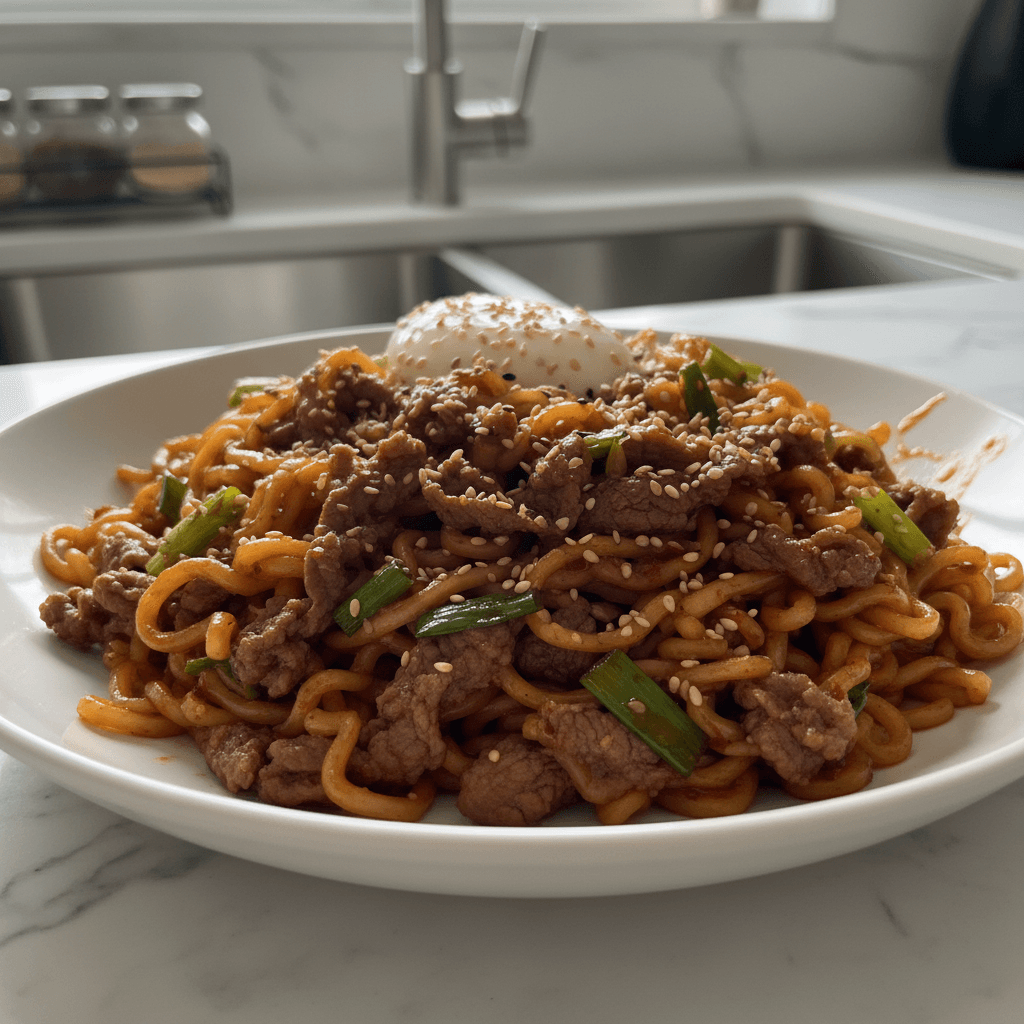
I’ve played around with these Spicy Korean Gochujang Beef Noodles quite a bit! If you don’t have flank steak, thinly sliced sirloin or even chicken breast (cut into strips) works well. I tried ground pork once, and it was good, but the texture was totally different, more like a ragu. For noodles, while udon is king, ramen noodles (without the seasoning packet, of course!) or even fettuccine can pinch-hit if you’re in a bind. I once used spaghetti, and it worked… kinda, but it wasn’t the same. As for veggies, feel free to swap in whatever you have: carrots, snap peas, mushrooms, or even spinach wilted in at the very end. Just make sure they cook at a similar rate. Don’t have fresh ginger? A tiny pinch of ground ginger can work, but it’s not quite the same vibrant flavor. Trust your gut and your fridge!
Serving Spicy Korean Gochujang Beef Noodles
These Spicy Korean Gochujang Beef Noodles are a complete meal on their own, but I love making them extra special. A sprinkle of fresh cilantro or extra scallions really brightens things up. Sometimes, I’ll even fry an egg, sunny-side up, and place it right on top so the runny yolk mixes with the sauce heavenly! For a side, a simple cucumber salad with a light vinegar dressing or some quick pickled radishes would be amazing to cut through the richness. And for drinks? A cold beer or a crisp glass of chilled white wine complements the spice beautifully. Honestly, this dish and a good action movie? Yes please! It’s perfect for a cozy night in, or even a fun, casual dinner with friends.
The Story Behind Spicy Korean Gochujang Beef Noodles
The star ingredient, gochujang, has such a rich history in Korean cuisine, dating back centuries! It’s a fermented chili paste that’s fundamental to so many iconic Korean dishes, bringing that unique balance of spicy, savory, and subtly sweet. For me, discovering gochujang was like unlocking a whole new level of flavor in my kitchen. I first tried a dish similar to these Spicy Korean Gochujang Beef Noodles at a small Korean restaurant during college, and I was hooked. I remember trying to recreate it at home, and my first attempt was… well, let’s just say I used way too much soy sauce and not enough gochujang. It was a salty mess! But through trial and error, I learned to appreciate the nuances of Korean flavors and how to balance them. It’s become one of those dishes that just feels like home to me now, full of warmth and a little bit of fire.
So there you have it, my take on Spicy Korean Gochujang Beef Noodles. It’s a recipe that’s seen its share of kitchen mishaps, but always delivers on flavor and comfort. There’s something so satisfying about seeing those vibrant noodles coated in that fiery sauce, knowing all the love and a little bit of chaos that went into it. I hope you give it a try and maybe even have a few of your own kitchen adventures with it. Let me know how your version turns out, I love hearing about your cooking journeys!
Frequently Asked Questions
- → Can I make these Spicy Korean Gochujang Beef Noodles less spicy?
Absolutely! You can reduce the amount of gochujang in the sauce by half and then add more to taste. A little extra brown sugar can also help mellow out the heat without losing flavor, which is what I do sometimes.
- → What kind of noodles work best for this recipe?
I really love thick udon noodles because of their chewy texture, they hold up so well to the sauce! But if you can’t find them, thick ramen noodles or even linguine can work in a pinch. I tried thin spaghetti once, and it just got a bit too soft for my liking.
- → How can I get my beef really tender in this dish?
The trick is to slice your flank steak thinly against the grain and not overcrowd the pan when searing. Cook it quickly over high heat for just a couple of minutes per side. Overcooking will make it tough, a mistake I’ve made more times than I’d like to admit!
- → Can I make these Spicy Korean Gochujang Beef Noodles ahead of time?
You can definitely prep components like slicing the beef and chopping veggies, and even make the sauce ahead of time. I wouldn’t cook the whole dish too far in advance, though, as the noodles can get a bit soft. It’s best assembled fresh for the best texture.
- → What other vegetables could I add to these Spicy Korean Gochujang Beef Noodles?
Oh, so many options! Sliced carrots, snap peas, mushrooms, or even bok choy would be delicious. Just make sure to add them to the pan according to their cooking times, so everything is perfectly tender-crisp. I’ve thrown in leftover spinach at the end, and it was great!

Spicy Korean Gochujang Beef Noodles: A Weeknight Favorite
- Prep Time: 20 Minutes
- Cook Time: 25 Minutes
- Total Time: 45 Minutes
- Yield: 4 Servings 1x
- Category: Dinner
Description
Spicy Korean Gochujang Beef Noodles bring bold flavor and comfort! Learn my easy recipe for tender beef, chewy noodles, and a a fiery sauce.
Ingredients
- Main Ingredients:
- 1 lb flank steak, thinly sliced against the grain
- 12 oz udon noodles (or thick ramen noodles)
- 1 tbsp neutral oil (like canola or vegetable)
- 1 head broccoli, cut into florets
- 1 bell pepper (any color), thinly sliced
- Gochujang Sauce Essentials:
- 3 tbsp gochujang (Korean chili paste)
- 3 tbsp soy sauce (low sodium preferred)
- 1 tbsp sesame oil
- 4 cloves garlic, minced
- 1 tbsp fresh ginger, grated
- 1 tbsp brown sugar
- 1 tbsp rice vinegar
- Fresh Add-ins:
- 3 scallions, chopped (for garnish)
- 1 tbsp toasted sesame seeds (for garnish)
- Optional Flavor Kicks:
- Kimchi, for serving
- Fried egg, for serving
Instructions
- Prep Your Beef and Veggies:: First things first, slice that flank steak against the grain into thin strips. This is where I always get a little messy, but it’s worth it for tender beef! Then, get your veggies chopped – broccoli into bite-sized florets, and bell pepper into strips. It’s a little chaotic on my cutting board at this stage, but having everything ready before you start cooking makes a huge difference, trust me.
- Whip Up That Gochujang Sauce:: In a small bowl, whisk together the gochujang, soy sauce, sesame oil, minced garlic, grated ginger, brown sugar, and rice vinegar. Give it a good stir until everything is nicely combined. This is the heart of your Spicy Korean Gochujang Beef Noodles, so taste it! If you want more heat, add a bit more gochujang. If it’s too spicy, a tiny bit more sugar or vinegar can balance it out. I’ve definitely over-spiced it before, but a quick fix usually saves the day!
- Cook the Noodles:: Get a pot of salted water boiling for your udon noodles. Cook them according to package directions until they’re tender but still have that lovely chew. This step is crucial for the texture of your Spicy Korean Gochujang Beef Noodles. Drain them well and maybe toss them with a tiny bit of oil to keep them from sticking while you finish everything else. I once forgot to salt the water, and the noodles just tasted… bland. Never again!
- Sauté the Beef:: Heat a large skillet or wok over medium-high heat with a splash of oil. Once it’s shimmering, add your beef strips in a single layer. Don’t overcrowd the pan, or it’ll steam instead of sear! Cook for just 2-3 minutes per side until browned. You want a nice sear, not gray beef. Remove the beef from the pan and set it aside. This step smells amazing, by the way!
- Stir-Fry the Veggies:: In the same pan, add your broccoli and bell pepper. Stir-fry for 3-5 minutes until they’re tender-crisp. You want them to still have a little bite, you know? Not mushy! If the pan looks a little dry, add another tiny splash of oil. Sometimes I get impatient here and overcook them, but I’m trying to be better!
- Combine and Finish Your Spicy Korean Gochujang Beef Noodles:: Return the beef to the pan with the veggies. Pour in your glorious gochujang sauce and toss everything to coat. Add the cooked udon noodles and toss again until everything is beautifully combined and heated through. It should look vibrant and smell absolutely incredible. Serve immediately, garnished with fresh scallions and toasted sesame seeds. Enjoy your Spicy Korean Gochujang Beef Noodles!